

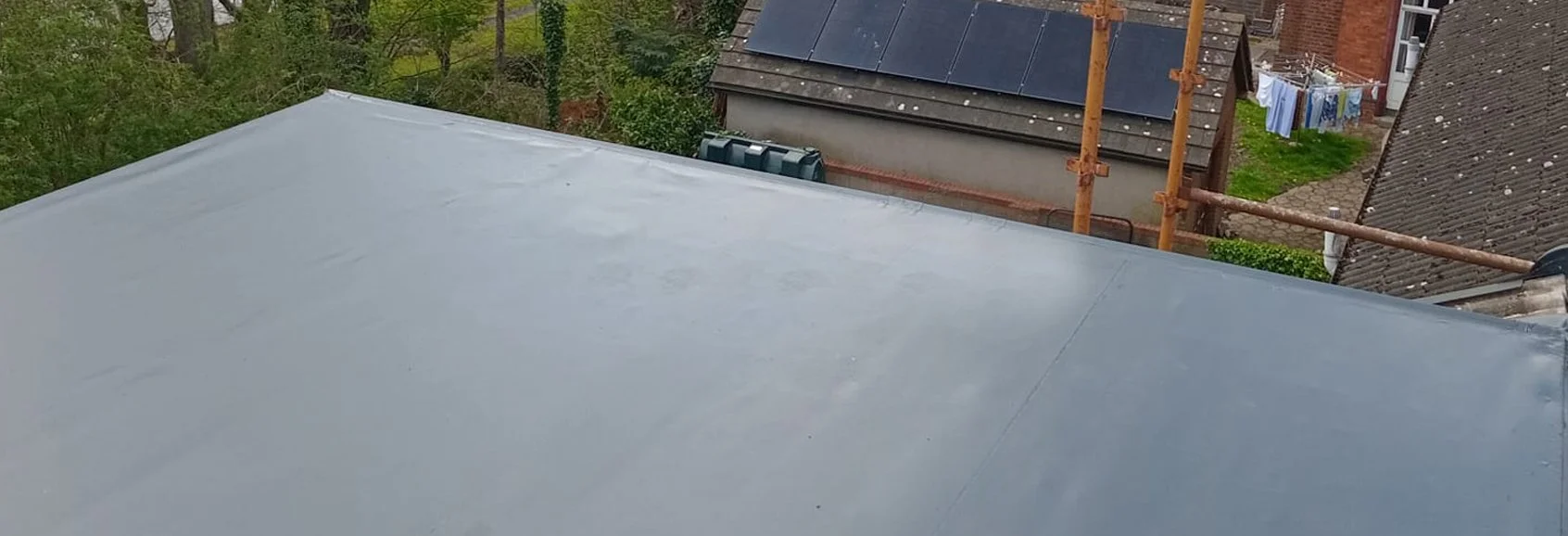
PVC single-ply membranes are a modern and versatile roofing solution
PVC single-ply membranes are trusted across residential, commercial, and industrial projects. These lightweight sheets are quick to install and create a strong, watertight seal, making them ideal for both new builds and refurbishments. Their resistance to UV rays, chemicals, and even root penetration makes them especially reliable for roofs exposed to the elements or used in green roof systems.
The clean, low-maintenance finish of PVC roofing not only enhances the appearance of a building but also reduces long-term upkeep costs. With excellent fire performance and energy efficiency benefits, our PVC membranes provide a practical and sustainable option for those seeking durability, performance, and modern design in one solution.
At ACE Flat Roofs & Carpentry we professionally install PVC single-ply membranes across Monaghan, Louth, Cavan, Dublin, Carrickmacross, Dundalk, Drogheda and Kingscourt — enjoy the clean look and energy efficiency benefits in your home! We use top quality brands like FDT Rhenofol PVC and Renolit Alkorplan.
FAQs
What is a PVC single-ply membrane?
PVC membranes are lightweight plastic sheets that are heat-welded together to form a durable, watertight roof covering.
Can PVC be used on green roofs?
Yes, PVC is root-resistant, which makes it an excellent choice for green roofing systems or roofs with landscaping.
Is PVC resistant to UV rays?
Yes, Rhenofol PVC membranes are designed to resist UV degradation, making them ideal for roofs exposed to direct sunlight.
How long does a PVC roof last?
PVC roofs typically last 25–35 years with proper care and maintenance. With the benefit that damaged sections can be heat-welded or patched.
Where is PVC roofing best used?
It’s ideal for commercial, industrial, and large flat roofs, but it can also be used on residential projects where a tough, modern finish is required.
How does PVC compare to EPDM?
Both are durable, but PVC has added benefits like chemical resistance and heat-welded seams, which create an extra-strong bond.